
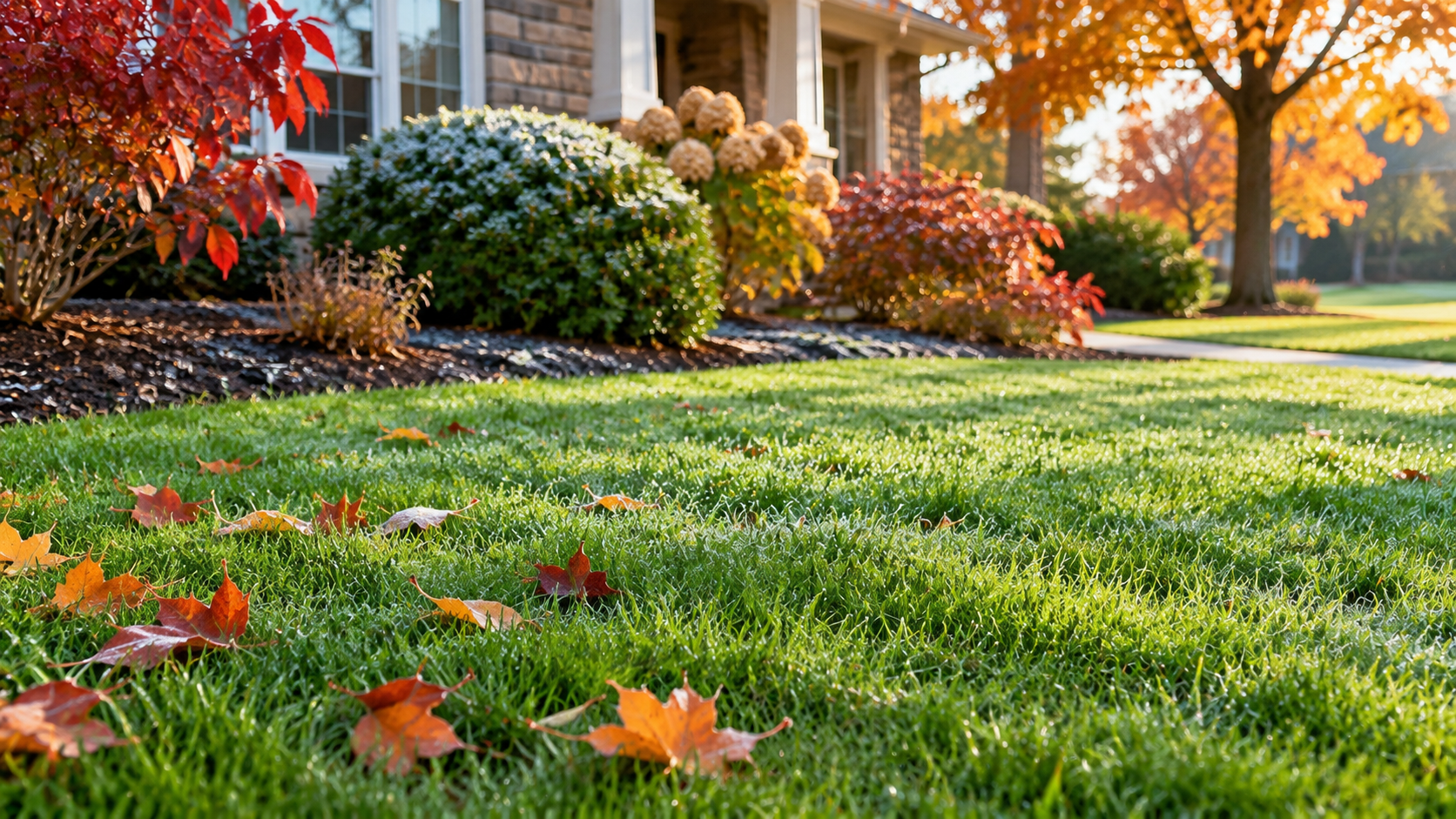
November is an important month for Kansas City homeowners preparing their lawns for winter. As temperatures drop, days become shorter, and grass growth begins slowing, your lawn starts transitioning from active fall growth toward winter dormancy.
Although lawn care may not be top of mind once colder weather arrives, the steps you take during late fall can have a significant impact on your lawn’s health and appearance the following spring.
From winter fertilization and final mowing to irrigation winterization and preventing cold-weather damage, proper preparation can help protect your lawn throughout the winter months.
- Why Winter Lawn Preparation Is Important in Kansas City
- Why Late Fall Fertilization Matters
- Don't Forget About Your Final Lawn Mowing
- Remove Excess Leaves Before Winter Arrives
- Winterize Your Irrigation System Before Freezing Temperatures
- Avoid Excessive Foot Traffic on Frozen Grass
- Be Careful With Ice Melt and Road Salt
- Does Your Lawn Need Water During Winter?
- Protect Trees and Shrubs From Winter Damage
- Common Winter Lawn Care Mistakes to Avoid
- November Is a Good Time to Evaluate Your Lawn
- Get Your Kansas City Lawn Ready for Winter
Why Winter Lawn Preparation Is Important in Kansas City
Kansas City experiences a wide range of winter weather conditions, including freezing temperatures, snow, ice, and occasional periods of warmer weather.
These changing conditions can create challenges for cool-season grasses commonly found throughout the Kansas City area, including tall fescue and Kentucky bluegrass.
While grass growth slows significantly during winter, your lawn is still affected by soil conditions, moisture, temperature fluctuations, and physical damage.
Proper winter lawn preparation can help:
- Support healthy root development before dormancy
- Reduce unnecessary stress on your grass
- Protect turf from winter-related damage
- Improve growing conditions for the following spring
- Reduce the potential for thin or damaged areas
- Maintain a healthier and more attractive lawn
Taking care of your lawn before winter arrives helps establish a stronger foundation for healthy growth when temperatures begin warming in spring.
Why Late Fall Fertilization Matters
One of the most important steps in preparing a cool-season lawn for winter is proper late fall fertilization.
During fall, cool-season grasses continue developing their root systems as temperatures become cooler. Even when visible grass growth begins slowing, the lawn may still benefit from nutrients that support plant health.
A properly timed winterizer fertilizer application can help provide essential nutrients before the lawn enters winter dormancy.
Benefits of late fall fertilization can include:
- Supporting root development before winter
- Helping replenish nutrients used during the growing season
- Improving the lawn’s ability to recover from seasonal stress
- Supporting healthy turf entering dormancy
- Encouraging stronger growth when spring arrives
- Helping maintain overall lawn health
The timing and type of fertilizer matter. Applications should be based on grass type, soil conditions, and whether the lawn is still actively growing.
A professional lawn care program can help ensure your lawn receives appropriate seasonal fertilization throughout the year.
Don’t Forget About Your Final Lawn Mowing
As November progresses, grass growth typically slows as temperatures become colder.
However, homeowners should not automatically stop mowing based on the calendar. Cool-season grass may continue growing during periods of mild fall weather.
Your final mowing should be determined by actual grass growth and weather conditions rather than a specific date.
Before putting your mower away for winter:
- Continue mowing while the grass is actively growing
- Avoid cutting grass excessively short
- Follow recommended mowing heights for your grass type
- Keep mower blades sharp for clean cuts
- Avoid mowing when the lawn is frozen or excessively wet
- Remove heavy accumulations of grass clippings or debris
For many Kansas City lawns with tall fescue, maintaining a mowing height around 3 inches during late fall is generally appropriate.
Cutting grass too short can place unnecessary stress on the turf, while allowing it to become excessively long may create additional maintenance concerns.
Remove Excess Leaves Before Winter Arrives
Fallen leaves are a natural part of autumn, but allowing thick layers to remain on your lawn throughout winter can create problems.
When leaves accumulate and become wet, they can form dense layers that block sunlight and restrict airflow around the grass.
These conditions may weaken turf and contribute to problems that become visible when spring arrives.
Before winter, pay attention to:
- Heavy leaf accumulation beneath mature trees
- Wet leaves that have become compacted
- Leaves collecting along fences and landscaping beds
- Areas where grass is completely covered
- Leaves blocking drainage areas
- Debris accumulating around shrubs and landscape features
Light amounts of dry leaves can sometimes be mulched into the lawn, but excessive accumulation should be removed.
Regular fall leaf cleanup helps maintain healthier growing conditions and keeps your property looking well-maintained heading into winter.
Winterize Your Irrigation System Before Freezing Temperatures
One of the most important winter preparation tasks for Kansas City homeowners is protecting their irrigation systems from freezing temperatures.
Water remaining inside sprinkler pipes, valves, and other irrigation components can freeze and expand when temperatures drop below freezing.
This expansion can damage irrigation equipment and lead to costly repairs when the system is activated again in spring.
Professional irrigation winterization helps remove water from the system and prepare it for freezing conditions.
Potential problems caused by improper winterization include:
- Cracked or damaged sprinkler pipes
- Broken sprinkler heads
- Damaged irrigation valves
- Problems with backflow prevention assemblies
- Underground leaks
- Unexpected repair expenses in spring
Scheduling professional irrigation winterization before freezing weather arrives can help protect your system and reduce the risk of winter damage.
If your irrigation system has not yet been winterized, it is important to address it as soon as possible.
Avoid Excessive Foot Traffic on Frozen Grass
During winter, grass becomes more vulnerable to certain types of physical damage.
When grass blades are frozen, they become less flexible and can be damaged by repeated foot traffic.
Walking across frost-covered or frozen lawns can injure grass blades, particularly when the turf is already stressed by cold weather.
To help protect your lawn during winter:
- Avoid unnecessary walking on frost-covered grass
- Keep vehicles off the lawn
- Limit repeated traffic across the same areas
- Use sidewalks and designated pathways
- Avoid placing heavy equipment on frozen turf
- Allow frozen grass to thaw before performing maintenance
Although occasional foot traffic may not cause significant damage, repeatedly using the same frozen areas can weaken the turf and contribute to visible wear.
Protecting your grass during winter can help reduce unnecessary repairs when spring arrives.
Be Careful With Ice Melt and Road Salt
Winter weather often requires homeowners to apply ice melt products to sidewalks, driveways, and other walking surfaces.
While these products can improve safety during icy conditions, certain deicing salts may damage nearby grass and landscape plants when applied excessively.
Salt can accumulate along the edges of sidewalks and driveways, potentially affecting soil conditions and plant health.
Areas that may be especially vulnerable include:
- Grass bordering driveways
- Lawn edges near sidewalks
- Areas surrounding front walkways
- Landscape beds near treated pavement
- Locations where melting snow drains into the lawn
- Areas where snow containing road salt is piled
Follow product instructions carefully and avoid applying more deicing material than necessary.
When possible, keep salt-treated snow away from sensitive lawn and landscape areas.
Does Your Lawn Need Water During Winter?
Homeowners often assume that lawns no longer need moisture once colder weather arrives.
Although watering requirements decrease significantly during winter, extended periods of dry weather can still affect grass and landscape plants.
Kansas City winters occasionally include stretches of dry weather without significant rainfall or snowfall.
During these periods, soil moisture may become limited, especially in exposed areas.
Consider the following:
- Monitor extended periods without precipitation
- Pay attention to newly established grass
- Check exposed areas that dry out quickly
- Avoid watering frozen soil
- Do not allow water to freeze on sidewalks or driveways
- Follow local watering recommendations during unusually dry conditions
Established cool-season lawns generally require much less supplemental water during winter than during active growing periods.
If winter watering becomes necessary, it should be done carefully during suitable weather conditions using an appropriate water source after the irrigation system has been winterized.
Protect Trees and Shrubs From Winter Damage
Winter preparation should extend beyond your lawn.
Trees, shrubs, and ornamental plants can also experience stress from freezing temperatures, drying winds, heavy snow, and fluctuating weather conditions.
Young trees, newly planted shrubs, and certain evergreen plants may be especially vulnerable during harsh winter conditions.
Before winter arrives, consider:
- Removing damaged or broken branches when appropriate
- Maintaining proper mulch around trees and shrubs
- Avoiding mulch piled against trunks and stems
- Monitoring soil moisture before the ground freezes
- Protecting vulnerable plants from excessive salt exposure
- Checking for branches that may be damaged by heavy snow
Proper seasonal maintenance can help reduce stress and support healthier plants when spring arrives.
Professional tree and shrub care can also help homeowners address plant health concerns and prepare their landscapes for changing seasonal conditions.
Common Winter Lawn Care Mistakes to Avoid
Many winter lawn problems begin with maintenance decisions made during late fall or the colder months.
While grass may appear dormant, improper care can still affect its health and appearance.
Common mistakes include:
- Skipping important late fall fertilization
- Cutting grass excessively short before winter
- Leaving thick layers of wet leaves on the lawn
- Failing to winterize irrigation systems
- Allowing repeated traffic across frozen grass
- Using excessive amounts of deicing salt near turf
- Ignoring unusually dry winter conditions
Avoiding these mistakes can help reduce unnecessary stress and give your lawn a better opportunity to recover when growing conditions improve.
November Is a Good Time to Evaluate Your Lawn
Before winter weather settles into the Kansas City area, take some time to evaluate the condition of your lawn and landscape.
November provides an opportunity to identify concerns that may need attention before the ground freezes.
Walk your property and look for areas that appear thin, damaged, compacted, or poorly drained.
Pay particular attention to:
- Thin or weak areas of grass
- Locations where leaves continue accumulating
- Areas affected by heavy foot traffic
- Low spots where water collects
- Grass bordering sidewalks and driveways
- Landscape beds requiring seasonal cleanup
- Trees and shrubs showing signs of damage
Identifying these concerns now can help you plan future lawn care services and address potential problems before the next growing season.
Get Your Kansas City Lawn Ready for Winter
Winter can bring challenging conditions for Kansas City lawns, but proper preparation can help protect your grass and landscape throughout the colder months.
Late fall fertilization, appropriate mowing, leaf removal, irrigation winterization, and avoiding unnecessary winter damage are all important parts of seasonal lawn care.
Taking care of these responsibilities before winter arrives can help support healthier turf and create a stronger foundation for spring growth.
Aspen Lawn & Pest Control has been helping Kansas City homeowners maintain beautiful lawns and landscapes since 1985. Our team can evaluate your property and recommend seasonal lawn care services based on your lawn’s needs.
Don’t wait until freezing temperatures arrive. Contact Aspen today to request your free estimate and prepare your lawn and landscape for winter.
Socials