
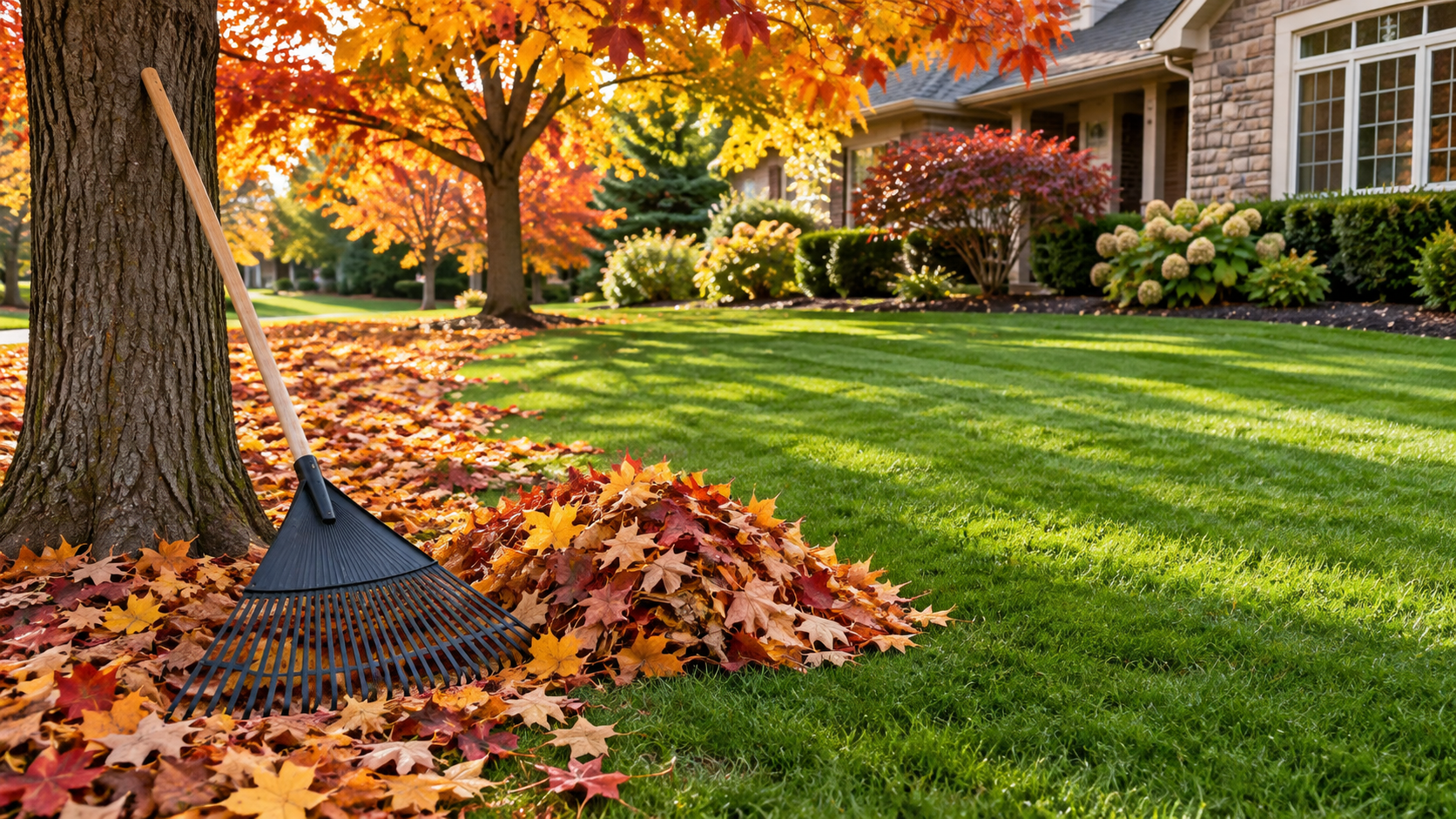
October is a beautiful time of year in the Kansas City area. Cooler temperatures and changing foliage bring colorful landscapes, but they also create an important lawn care responsibility for homeowners: fall leaf removal.
As leaves begin falling from trees, they can quickly accumulate across lawns, landscaping beds, sidewalks, and other areas of your property. While a few scattered leaves generally won’t cause problems, allowing thick layers of leaves to remain on your lawn can negatively affect the health of your grass.
Regular fall leaf removal helps protect your lawn, maintain your property’s appearance, and prepare your landscape for the winter months ahead.
- Why Fall Leaf Removal Is Important for Your Lawn
- How Fallen Leaves Can Damage Your Grass
- Wet Leaves Can Create Additional Lawn Problems
- Can Fallen Leaves Contribute to Lawn Diseases?
- How Often Should You Remove Leaves During Fall?
- Should You Mulch Leaves or Remove Them?
- Don't Forget About Landscape Beds and Other Areas
- Fall Leaf Removal Helps Prepare Your Lawn for Winter
- October Is a Good Time to Plan Your Leaf Removal
- Why Professional Fall Leaf Removal Makes Sense
- Get Your Kansas City Lawn Ready for Winter
Why Fall Leaf Removal Is Important for Your Lawn
Fall is an important season for cool-season grasses commonly found throughout the Kansas City area.
As temperatures cool, grass continues growing and developing its root system before winter dormancy. During this time, your lawn still needs sunlight, air circulation, and access to moisture to remain healthy.
When fallen leaves accumulate in thick layers, they can interfere with these essential growing conditions.
Regular leaf removal can help:
- Allow sunlight to reach your grass
- Improve air circulation across the lawn
- Prevent excessive moisture from becoming trapped
- Reduce conditions that may encourage lawn diseases
- Protect grass from becoming smothered
- Maintain a clean and attractive landscape
- Prepare your lawn for winter and spring growth
Removing accumulated leaves throughout the fall helps your lawn receive the sunlight and air it needs before colder temperatures arrive.
How Fallen Leaves Can Damage Your Grass
Leaves are a natural part of the fall season, but excessive accumulation can create problems for your lawn.
When thick layers of leaves cover grass for extended periods, they can block sunlight and restrict airflow. This is especially problematic when leaves become wet and compacted following rainfall.
Over time, these conditions can weaken the grass underneath.
Common problems caused by excessive leaf accumulation include:
- Yellowing or thinning grass
- Reduced sunlight reaching the turf
- Excess moisture trapped near the soil surface
- Increased potential for certain fungal diseases
- Weak or damaged grass entering winter
- Bare or thin areas appearing the following spring
The longer thick layers of leaves remain on your lawn, the greater the potential for damage, particularly during extended periods of wet weather.
Wet Leaves Can Create Additional Lawn Problems
Fall weather in Kansas City can bring periods of rain, cooler temperatures, and changing conditions.
When fallen leaves become wet, they can stick together and form dense layers across the lawn. These layers can prevent sunlight and air from reaching the grass beneath them.
Wet leaves also take longer to dry, especially in shaded areas or locations with limited airflow.
Areas that may be especially vulnerable include:
- Lawns beneath large shade trees
- Areas along fences and property boundaries
- Low spots where moisture collects
- Shaded sections near buildings
- Areas with heavy leaf accumulation
- Sections with poor drainage or limited airflow
Removing leaves before they become heavily compacted can help prevent these conditions from developing.
Can Fallen Leaves Contribute to Lawn Diseases?
Certain lawn diseases develop more readily when moisture remains trapped around grass for extended periods.
Thick layers of fallen leaves can create damp conditions that encourage fungal activity, particularly when temperatures fluctuate and the lawn receives limited sunlight.
Although leaves themselves do not automatically cause lawn diseases, excessive accumulation can create an environment that makes some problems more likely.
Potential concerns include:
- Prolonged moisture around grass blades
- Reduced air circulation
- Increased humidity near the turf surface
- Weakening of grass covered by dense leaf layers
- Conditions favorable to certain fungal diseases
Maintaining a clean lawn through regular leaf removal is one way to help reduce unnecessary stress and support healthier turf.
How Often Should You Remove Leaves During Fall?
There is no single leaf removal schedule that works for every property.
The amount of leaf accumulation depends on the number of trees, tree varieties, weather conditions, and the size of your lawn.
Some properties may only need occasional attention, while others with mature trees may require several cleanups throughout the fall season.
Consider removing leaves when:
- Large portions of the lawn become covered
- Leaves begin forming thick or compacted layers
- Rain is expected and significant leaf accumulation is present
- Leaves collect heavily around landscaping beds
- Grass is no longer easily visible beneath fallen leaves
- Wet leaves begin sticking together across the lawn
Staying ahead of leaf accumulation is generally easier than waiting until the majority of leaves have fallen and become wet or compacted.
Should You Mulch Leaves or Remove Them?
Homeowners often wonder whether they should mulch fallen leaves with a lawn mower or remove them completely.
Both approaches can be beneficial depending on the amount of leaves covering the lawn.
When leaves are dry and lightly scattered, mowing them into small pieces can help return organic matter to the soil. Properly shredded leaves can break down naturally without significantly blocking sunlight.
However, mulching may not be practical when large quantities of leaves cover the grass.
Leaf removal may be the better option when:
- Leaves form thick layers across the lawn
- Large amounts of leaves accumulate beneath mature trees
- Leaves are wet and difficult to mulch effectively
- Shredded leaves would still cover significant portions of the grass
- Leaves accumulate heavily around landscape features
- Repeated mowing would leave excessive debris behind
The goal is to prevent leaves from creating a dense covering that interferes with healthy grass growth.
Don’t Forget About Landscape Beds and Other Areas
Fall leaf removal is not limited to the grass in your yard.
Leaves also accumulate around shrubs, landscape beds, patios, walkways, driveways, and other areas of your property.
While a light layer of shredded leaves can provide organic matter and help protect soil in landscape beds, excessive accumulation may create unwanted conditions.
Pay particular attention to:
- Landscape beds surrounding your home
- Areas beneath shrubs and ornamental plants
- Walkways and outdoor living spaces
- Driveways and areas near garages
- Drainage areas and surface drains
- Areas where wind causes leaves to collect
Keeping these areas maintained can improve your property’s appearance and help prevent leaves from obstructing drainage or creating slippery walking surfaces.
Fall Leaf Removal Helps Prepare Your Lawn for Winter
As temperatures continue dropping, cool-season lawns begin transitioning toward winter dormancy.
Before this happens, grass benefits from receiving adequate sunlight and maintaining healthy growing conditions.
Leaving thick layers of leaves on the lawn throughout late fall and winter can contribute to turf damage, particularly when leaves remain wet or become trapped beneath snow.
Removing excessive leaves before winter can help:
- Reduce the likelihood of grass becoming smothered
- Maintain better airflow around the turf
- Prevent heavy layers of debris from remaining through winter
- Support healthier grass heading into dormancy
- Reduce the amount of cleanup needed in early spring
- Improve the overall appearance of your property
A properly maintained lawn entering winter is better positioned to resume healthy growth when favorable conditions return in spring.
October Is a Good Time to Plan Your Leaf Removal
October is an excellent time to begin evaluating your property’s fall cleanup needs.
Although the timing of leaf drop varies from year to year, many trees throughout the Kansas City area begin shedding significant amounts of foliage during October and November.
Properties with several mature trees may benefit from multiple leaf removal visits rather than waiting until the end of the season.
Planning ahead gives you time to:
- Evaluate how much leaf accumulation to expect
- Identify areas requiring additional attention
- Determine whether multiple cleanups may be necessary
- Keep leaves from becoming heavily compacted
- Schedule professional leaf removal services
- Prepare your lawn and landscape for winter
Scheduling leaf removal before heavy accumulation becomes a problem can make maintaining your property easier throughout the season.
Why Professional Fall Leaf Removal Makes Sense
Removing leaves can be a time-consuming project, particularly for properties with large lawns or numerous mature trees.
As leaves continue falling throughout October and November, homeowners may find themselves repeatedly raking, blowing, collecting, and disposing of large amounts of debris.
Professional leaf removal services can help simplify this seasonal responsibility.
Benefits of professional leaf removal include:
- Saving time and physical effort
- Removing large amounts of accumulated leaves
- Cleaning up lawn and landscape areas
- Reducing the need for repeated weekend cleanups
- Helping maintain your property’s curb appeal
- Preparing your lawn for the winter months
Combining professional leaf removal with a comprehensive lawn care program can help keep your property looking its best throughout the changing seasons.
Get Your Kansas City Lawn Ready for Winter
Fall leaves may create a beautiful seasonal landscape, but allowing them to accumulate excessively can negatively affect your lawn’s health.
Regular leaf removal helps prevent grass from becoming smothered, reduces conditions that may encourage lawn diseases, and keeps your property looking clean and well-maintained.
Whether your property has a few small trees or numerous mature trees, staying ahead of fallen leaves is an important part of preparing your lawn for winter.
Aspen Lawn & Pest Control has been helping Kansas City homeowners maintain beautiful lawns and landscapes since 1985. Our professional team can help with seasonal leaf removal and other fall lawn care needs.
Don’t let fallen leaves pile up this season. Contact Aspen today to request your free estimate and get your property ready for winter.
Socials