
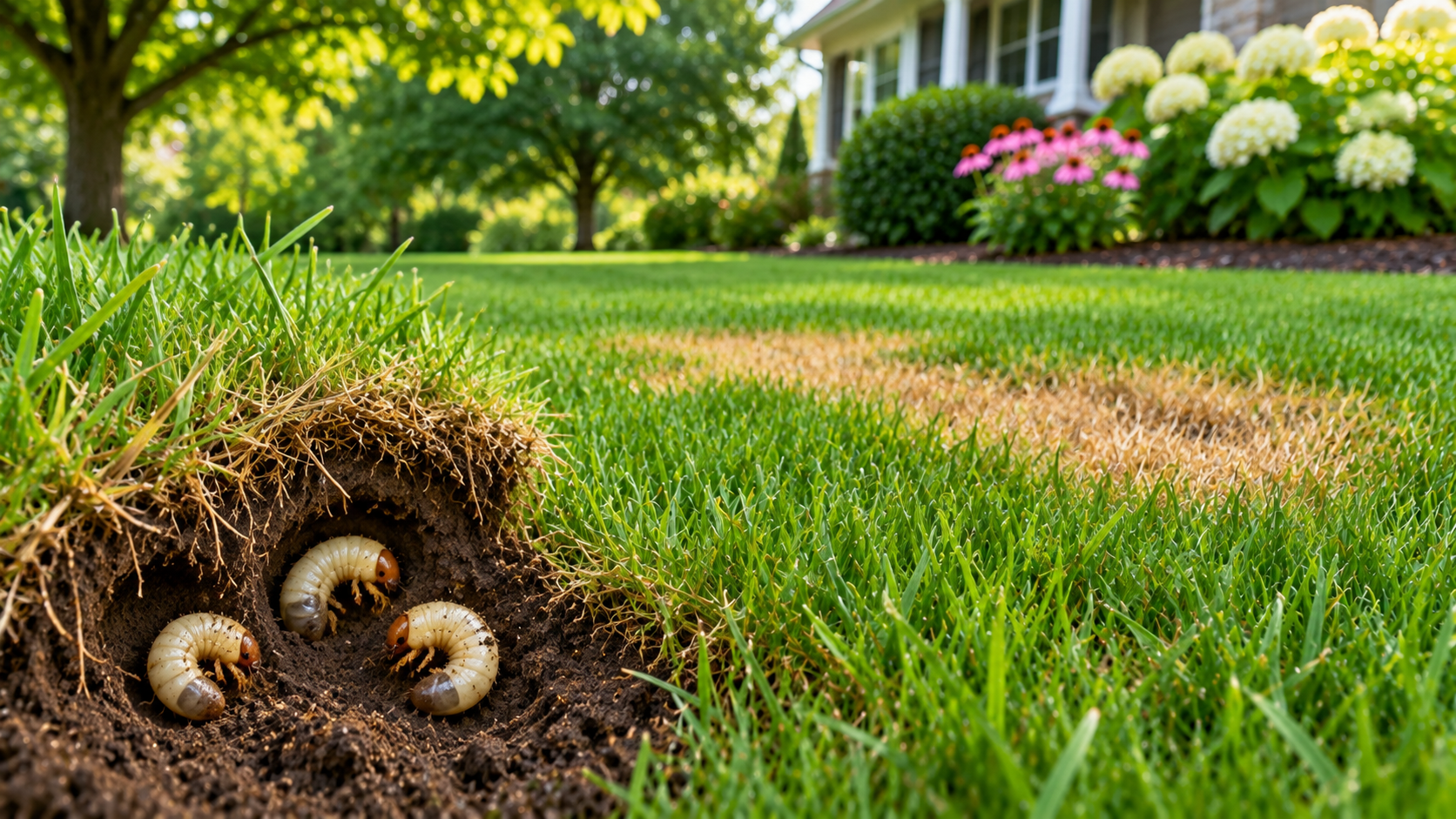
July is an important month for lawn care in the Kansas City area. While homeowners often focus on protecting their grass from summer heat and drought, another problem may be developing beneath the surface: white grubs.
These common lawn pests feed on grass roots and can cause significant damage when populations become large enough. Unfortunately, homeowners may not notice the problem until brown patches, thinning grass, or loose sections of turf begin appearing later in summer.
Understanding what white grubs are, recognizing the warning signs, and knowing when treatments are most effective can help protect your lawn before serious damage occurs.
- What Are White Grubs?
- Why July Is Important for Grub Prevention
- How White Grubs Damage Your Lawn
- Common Signs of Grub Damage in Kansas City Lawns
- Grub Damage vs. Drought Stress: What's the Difference?
- How to Check Your Lawn for White Grubs
- Why Birds, Skunks, and Raccoons May Dig Up Your Lawn
- Preventive vs. Curative Grub Control Treatments
- When Is the Best Time to Treat Grubs in Kansas City?
- Why Watering Matters After Grub Treatments
- Can Grub Damage Kill Your Grass?
- Can a Healthy Lawn Help Reduce Grub Damage?
- How to Repair a Lawn Damaged by Grubs
- Why Professional Grub Control Makes Sense
- Protect Your Kansas City Lawn From Summer Grub Damage
What Are White Grubs?
White grubs are the immature larval stage of several types of beetles commonly found throughout Kansas and Missouri.
These pests live beneath the soil surface and feed on grass roots as they develop.
White grubs are typically easy to recognize when uncovered in the soil.
Common characteristics include:
- White or cream-colored bodies
- Distinctive C-shaped appearance
- Brown or reddish-brown heads
- Three pairs of small legs near the head
- Soft, segmented bodies
- Sizes that vary depending on species and maturity
Several beetle species can produce white grubs, including masked chafers, Japanese beetles, and May or June beetles.
Although finding a few grubs in the soil is not necessarily a problem, larger populations can damage grass roots and weaken the lawn.
Why July Is Important for Grub Prevention
July is an important time for managing white grubs because many beetle species are laying eggs or beginning the next stage of their life cycle.
In the Kansas City area, adult beetles commonly emerge during late spring and early summer.
After mating, females lay eggs in the soil. These eggs hatch into small grubs that begin feeding on grass roots.
The general grub life cycle includes:
- Adult beetles emerging during late spring or summer
- Beetles mating and laying eggs in the soil
- Eggs hatching during summer
- Young grubs beginning to feed on grass roots
- Grubs growing larger and causing more damage
- Grubs moving deeper into the soil as winter approaches
Preventive grub control treatments are commonly applied during June and early July, depending on the product and target species.
These treatments are designed to control young grubs before they become large enough to cause significant root damage.
How White Grubs Damage Your Lawn
Unlike many lawn pests that feed on grass blades, white grubs primarily damage the root system.
Grass roots are responsible for absorbing water and nutrients from the soil.
When grubs feed on these roots, they reduce the lawn’s ability to access the resources needed for healthy growth.
As root damage increases, affected grass may begin showing signs of stress.
Common effects of grub feeding include:
- Reduced root development
- Grass becoming weak or thin
- Yellowing or browning turf
- Increased sensitivity to heat and drought
- Irregular patches of dying grass
- Sections of turf separating easily from the soil
- Permanent grass loss in severely damaged areas
Because grubs feed underground, significant damage may occur before homeowners realize there is a problem.
Common Signs of Grub Damage in Kansas City Lawns
Grub damage often becomes noticeable during late summer when young grubs grow larger and begin consuming more grass roots.
However, symptoms may develop earlier depending on the grub species, population, and weather conditions.
One of the most recognizable signs is grass that begins turning brown despite receiving adequate moisture.
Warning signs of possible grub damage include:
- Irregular brown or yellow patches
- Grass thinning in previously healthy areas
- Wilting despite adequate watering
- Sections of turf that lift easily from the soil
- Visible white grubs beneath damaged grass
- Birds or other animals digging in the lawn
- Damage becoming more noticeable during hot weather
These symptoms can resemble drought stress, fungal disease, and other lawn problems.
Correct identification is important before selecting a treatment.
Grub Damage vs. Drought Stress: What’s the Difference?
Kansas City summers frequently bring high temperatures and periods of limited rainfall.
As a result, homeowners may assume brown or thinning grass is simply suffering from drought.
Unfortunately, grub damage can create similar symptoms because damaged roots cannot absorb water efficiently.
Even when the soil contains adequate moisture, grass affected by severe root feeding may continue wilting.
Signs that may suggest grub damage include:
- Brown patches appearing despite adequate watering
- Grass pulling away easily from the soil
- Very few healthy roots beneath damaged turf
- White grubs visible in the upper soil
- Animals digging in affected areas
Signs that may suggest drought stress include:
- Dry soil beneath the grass
- Grass blades folding or curling
- Footprints remaining visible after walking across the lawn
- Damage appearing in areas with poor irrigation coverage
- Grass responding to appropriate watering when roots remain healthy
Because multiple problems can occur at the same time, inspecting the roots and soil is often necessary to determine the cause.
How to Check Your Lawn for White Grubs
If you suspect grubs are damaging your lawn, inspecting the soil beneath affected areas can help confirm their presence.
White grubs are commonly found near the root zone during periods when they are actively feeding.
A basic inspection involves examining the soil beneath damaged grass.
To check for grubs:
- Choose an area where grass appears weak or damaged
- Use a shovel to cut a section approximately one square foot in size
- Carefully lift the grass and upper soil
- Inspect the roots and surrounding soil
- Look for white, C-shaped larvae
- Count the number of grubs present
- Replace the turf and water the area appropriately
Finding one or two grubs does not automatically mean treatment is necessary.
Treatment decisions depend on grub species, population size, turf condition, and the amount of damage occurring.
A professional lawn care technician can help determine whether grub populations are high enough to justify treatment.
Why Birds, Skunks, and Raccoons May Dig Up Your Lawn
White grubs can attract animals that feed on insects living beneath the soil surface.
Birds, skunks, and raccoons may dig into turf while searching for grubs and other soil-dwelling organisms.
This activity can create additional lawn damage beyond the root feeding caused by the grubs themselves.
Signs of animal activity may include:
- Small holes appearing throughout the lawn
- Sections of grass being pulled or rolled back
- Loose pieces of turf scattered across the yard
- Repeated digging in the same areas
- Damage appearing overnight
- Birds frequently feeding in specific lawn areas
Animal digging does not always indicate a grub infestation because animals may be searching for other insects or food sources.
However, repeated digging combined with thinning grass and visible grubs may indicate a problem worth investigating.
Preventive vs. Curative Grub Control Treatments
Grub control generally involves two approaches: preventive treatments and curative treatments.
The appropriate method depends on the time of year, grub development, treatment product, and whether significant damage has already occurred.
Preventive treatments are designed to control young grubs before they cause serious damage.
Curative treatments are used when grubs are already present and actively feeding.
Preventive grub control:
- Typically targets newly hatched or young grubs
- Is commonly applied during late spring or early summer
- Can help reduce future root damage
- May be recommended for lawns with a history of grub problems
- Requires proper product selection and timing
Curative grub control:
- Targets grubs already present in the soil
- May be necessary when damaging populations are discovered
- Requires treatment products appropriate for the grub stage
- Is often most effective while grubs are relatively small
- Cannot restore roots that have already been destroyed
Not all grub control products work the same way.
Some preventive products require application well before damage becomes visible, while certain curative products are intended for actively feeding grubs.
When Is the Best Time to Treat Grubs in Kansas City?
Proper timing is one of the most important factors in successful grub control.
Many common white grub species begin feeding during summer, but their exact development depends on the species and seasonal weather conditions.
For Kansas City lawns, preventive grub treatments are commonly scheduled during June and early July.
Curative treatments may be appropriate later in summer when young grubs are present and actively feeding.
Important treatment considerations include:
- Grub species and life cycle
- Time of year
- Current grub population
- Previous history of lawn damage
- Soil moisture conditions
- Product-specific application requirements
- Whether damage has already occurred
Waiting until large brown patches appear can make recovery more difficult because the grass roots may already be severely damaged.
For properties with recurring grub problems, planning preventive treatment before peak feeding activity can help reduce the risk of significant turf loss.
Why Watering Matters After Grub Treatments
Because white grubs live beneath the soil surface, many grub control products must reach the root zone to work effectively.
Depending on the product, watering after treatment may be necessary to move the active ingredient into the soil.
Without proper irrigation, some treatments may not provide the expected level of control.
Important considerations include:
- Following all product label instructions
- Applying the recommended amount of water
- Ensuring irrigation coverage is consistent
- Avoiding excessive runoff
- Monitoring rainfall after treatment
- Following required restrictions for people and pets
Homeowners with sprinkler systems should make sure their irrigation equipment is operating correctly.
Professional irrigation services can help address coverage problems that may affect lawn health and treatment performance.
Can Grub Damage Kill Your Grass?
Severe grub infestations can cause permanent turf loss.
Because grubs feed on grass roots, extensive feeding can leave grass unable to absorb enough water and nutrients to survive.
When the root system becomes severely damaged, affected sections may turn brown and separate easily from the soil.
The extent of damage depends on:
- Number of grubs present
- Grub species and size
- Duration of feeding activity
- Overall health of the lawn
- Summer heat and drought conditions
- Soil moisture availability
- Whether treatment occurs before significant root loss
Grass with limited root damage may recover when grub activity is controlled and favorable growing conditions return.
However, areas with extensive root loss may require reseeding or other lawn renovation services.
Can a Healthy Lawn Help Reduce Grub Damage?
Maintaining healthy grass is an important part of managing lawn stress and improving recovery from insect damage.
A dense lawn with a well-developed root system may tolerate limited root feeding better than thin or weakened turf.
However, even healthy lawns can suffer damage when grub populations become excessive.
Helpful lawn care practices include:
- Maintaining appropriate mowing heights
- Watering according to lawn and weather conditions
- Avoiding unnecessary summer fertilization
- Reducing soil compaction
- Addressing irrigation problems
- Monitoring recurring brown patches
- Following a consistent seasonal lawn care program
Professional lawn care services can help support turf health while addressing seasonal insect, weed, and disease concerns.
How to Repair a Lawn Damaged by Grubs
Once grub activity has been addressed, the next step is determining whether damaged grass can recover or needs to be replaced.
Mildly affected turf may recover if enough healthy roots remain.
However, areas where the root system has been destroyed may require additional work.
Potential recovery steps include:
- Confirming that damaging grub activity has been controlled
- Evaluating the extent of root damage
- Removing severely damaged or dead turf when necessary
- Correcting irrigation and soil problems
- Preparing damaged areas for reseeding
- Considering fall aeration and overseeding
- Maintaining appropriate watering during recovery
September generally provides favorable conditions for establishing cool-season grasses in Kansas City.
For lawns with significant summer grub damage, fall overseeding can help restore turf density and improve the overall appearance of the property.
Why Professional Grub Control Makes Sense
Grub damage can be difficult to identify because symptoms often resemble drought stress, lawn diseases, and other common turf problems.
Successful treatment requires understanding the grub life cycle, selecting appropriate products, and applying them at the correct time.
Professional grub control services can help homeowners address these challenges.
Benefits of professional grub control can include:
- Evaluating symptoms of possible grub damage
- Identifying active grub populations
- Determining whether treatment is necessary
- Selecting appropriate treatment methods
- Coordinating preventive applications
- Providing recommendations for damaged turf
- Supporting an ongoing lawn care program
Not every lawn requires annual grub treatment.
However, properties with a history of damaging infestations may benefit from a preventive approach designed to reduce the risk of future root damage.
Protect Your Kansas City Lawn From Summer Grub Damage
White grubs may be small, but large populations can cause significant damage to Kansas City lawns.
By feeding on grass roots, these pests can weaken turf, create brown patches, and contribute to permanent grass loss during the hottest months of summer.
July is an important time to evaluate grub prevention needs, especially for lawns with a history of recurring infestations.
Properly timed treatments, professional identification, and consistent lawn maintenance can help reduce the risk of serious damage.
Aspen Lawn & Pest Control has been helping Kansas City homeowners maintain healthy, beautiful lawns since 1985. Our experienced team can evaluate your lawn and recommend appropriate grub control and seasonal lawn care services.
Don’t wait until grub damage becomes a bigger problem. Contact Aspen today to request your free estimate and help protect your lawn from summer pests.
Socials