
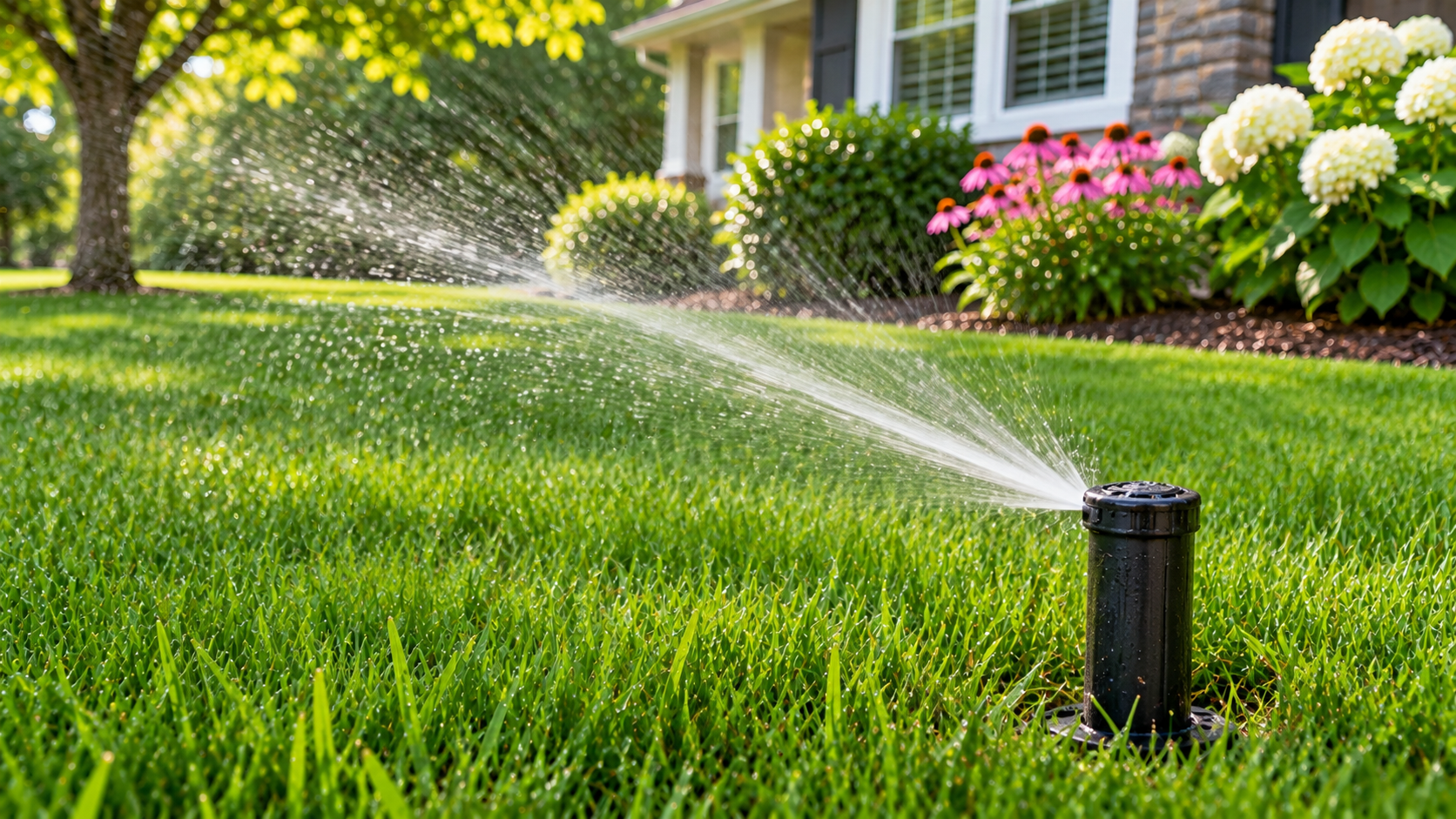
June is an important month for lawn care in the Kansas City area. As temperatures rise and summer weather approaches, homeowners increasingly rely on their irrigation systems to keep lawns and landscapes healthy.
However, sprinkler systems can develop problems that aren’t always immediately noticeable. Broken sprinkler heads, uneven watering, leaks, and outdated controllers can lead to dry patches, wasted water, and unnecessary stress on your grass.
Recognizing the warning signs of irrigation problems early can help prevent lawn damage, reduce water waste, and avoid more expensive repairs later in the season.
- Why Proper Irrigation Is Important During Kansas City Summers
- 1. Uneven Watering and Dry Spots in Your Lawn
- 2. Low Water Pressure or Weak Sprinkler Performance
- 3. Broken or Leaking Sprinkler Heads
- 4. Sprinklers Spraying Sidewalks, Driveways, or Buildings
- 5. Unexpectedly High Water Bills
- 6. Sprinkler Zones Not Working Properly
- 7. Outdated Irrigation Controllers and Watering Schedules
- How Smart Irrigation Upgrades Can Improve Water Efficiency
- Why Regular Irrigation Inspections Are Important
- How Irrigation Problems Can Affect Lawn Health
- When Should You Schedule Sprinkler System Repairs?
- Why Professional Irrigation Repair Makes Sense
- Keep Your Kansas City Lawn Healthy This Summer
Why Proper Irrigation Is Important During Kansas City Summers
Kansas City summers can bring high temperatures, periods of limited rainfall, and increased water demands for lawns and landscapes.
Cool-season grasses such as tall fescue and Kentucky bluegrass can experience significant stress when temperatures rise and soil moisture becomes limited.
A properly functioning irrigation system helps deliver water consistently and efficiently throughout your property.
Benefits of a well-maintained sprinkler system include:
- More consistent watering across your lawn
- Reduced risk of dry or stressed grass
- Improved water efficiency
- Healthier root development
- Less unnecessary runoff and overspray
- Reduced water waste from leaks
- Better protection during hot summer weather
Regular irrigation inspections and maintenance can help identify problems before they negatively affect your lawn.
1. Uneven Watering and Dry Spots in Your Lawn
One of the most common signs of an irrigation problem is uneven watering.
If some areas of your lawn remain green while others become dry, yellow, or brown, your sprinkler system may not be distributing water evenly.
This can happen when sprinkler heads are improperly adjusted, blocked, damaged, or spaced incorrectly.
Common causes of uneven watering include:
- Misaligned sprinkler heads
- Clogged or damaged nozzles
- Insufficient sprinkler coverage
- Incorrect spray patterns
- Low water pressure
- Overgrown landscaping blocking spray
- Sprinkler heads that no longer rise properly
Uneven watering can create stressed areas that are more vulnerable to summer heat, drought, and other lawn problems.
A professional irrigation inspection can help identify coverage issues and determine whether sprinkler adjustments or repairs are needed.
2. Low Water Pressure or Weak Sprinkler Performance
Water pressure plays an important role in how effectively your irrigation system operates.
When pressure is too low, sprinkler heads may not distribute water far enough to cover their intended areas.
This can leave portions of the lawn without adequate moisture.
Signs of low water pressure include:
- Sprinkler heads failing to pop up completely
- Weak or inconsistent spray patterns
- Water failing to reach expected distances
- Multiple heads performing poorly in the same zone
- Uneven watering throughout the lawn
- Reduced performance compared to previous seasons
Low pressure can result from leaks, clogged components, partially closed valves, or other irrigation system problems.
Excessively high pressure can also create problems by producing fine mist, increasing water waste, and placing unnecessary stress on system components.
Pressure-regulated sprinkler heads and properly designed irrigation zones can help improve watering performance.
3. Broken or Leaking Sprinkler Heads
Sprinkler heads are exposed to lawn equipment, foot traffic, weather, and normal wear throughout the year.
Over time, they can become cracked, damaged, clogged, or misaligned.
A broken sprinkler head may waste significant amounts of water while preventing nearby grass from receiving adequate coverage.
Common signs of damaged sprinkler heads include:
- Water spraying in unexpected directions
- Water bubbling or pooling around a sprinkler head
- Heads that remain stuck above or below ground
- Cracked or visibly damaged components
- Unusual spray patterns
- Water flowing excessively from one location
- Wet areas surrounding individual sprinkler heads
Even a small leak can waste water over time and contribute to oversaturated soil.
Replacing damaged components and correcting sprinkler head alignment can help restore proper coverage and improve system efficiency.
4. Sprinklers Spraying Sidewalks, Driveways, or Buildings
A properly adjusted irrigation system should direct water toward the lawn and landscape areas that need it.
When sprinkler heads spray onto sidewalks, driveways, streets, or buildings, water is being wasted.
Overspray can occur when sprinkler heads shift, nozzles become damaged, or spray patterns are incorrectly adjusted.
Common signs of overspray include:
- Water repeatedly spraying onto sidewalks
- Sprinklers watering driveways or streets
- Water hitting windows or exterior walls
- Excessive runoff along paved surfaces
- Sprinkler heads spraying beyond landscape boundaries
- Water collecting in areas that do not require irrigation
Adjusting sprinkler heads or installing more efficient nozzles can help direct water where it is needed.
For some systems, upgrading to MP Rotator nozzles or pressure-regulated spray heads may help improve water distribution and reduce unnecessary waste.
5. Unexpectedly High Water Bills
A sudden increase in your water bill may indicate that your irrigation system is using more water than expected.
Although water usage naturally increases during summer, unusually high consumption can sometimes be caused by hidden leaks or inefficient watering schedules.
Underground irrigation leaks may go unnoticed for extended periods because damaged pipes are buried beneath the lawn.
Potential warning signs include:
- Water bills increasing without a clear explanation
- Unusually wet areas of the lawn
- Water pooling near sprinkler heads or valve boxes
- Sprinkler zones running longer than intended
- Water continuing to flow after a zone shuts off
- Unexpected water movement near irrigation equipment
A professional irrigation inspection can help identify leaks, malfunctioning valves, and other problems contributing to excessive water usage.
Addressing these issues early can help reduce water waste and prevent additional damage.
6. Sprinkler Zones Not Working Properly
Most residential irrigation systems are divided into multiple watering zones.
Each zone controls a specific section of the lawn or landscape, allowing different areas to receive water according to their needs.
When one or more zones stop functioning correctly, portions of the property may receive too much or too little water.
Common irrigation zone problems include:
- Zones failing to turn on
- Zones continuing to run after their scheduled time
- Multiple zones operating unexpectedly
- Sprinkler heads receiving insufficient pressure
- Valves failing to open or close properly
- Electrical or wiring problems
- Controller programming issues
Zone problems may involve malfunctioning valves, damaged wiring, controller issues, or other system components.
Professional troubleshooting can help identify the source of the problem and restore proper operation.
7. Outdated Irrigation Controllers and Watering Schedules
An irrigation controller determines when your sprinkler system runs and how long each zone receives water.
Older controllers may rely on fixed schedules that do not automatically adjust for changing weather conditions.
This can lead to unnecessary watering during rainy periods or insufficient irrigation during unusually hot weather.
Signs your controller or watering schedule may need attention include:
- Sprinklers running during or shortly after rainfall
- Watering schedules remaining unchanged throughout summer
- Zones running longer than necessary
- Difficulty adjusting watering programs
- Limited control over individual irrigation zones
- Inconsistent watering during changing weather conditions
Modern smart irrigation controllers can provide additional flexibility and help improve watering efficiency.
For example, Hydrawise Wi-Fi irrigation controllers offer remote system management and weather-based scheduling capabilities.
Upgrading an outdated controller can make it easier to manage irrigation schedules and respond to changing lawn conditions.
How Smart Irrigation Upgrades Can Improve Water Efficiency
Irrigation technology has improved significantly over the years.
Modern sprinkler components and smart controllers can help homeowners achieve more consistent watering while reducing unnecessary water usage.
Depending on the existing system, upgrades may provide improved coverage, pressure regulation, and watering control.
Potential irrigation upgrades include:
- Hydrawise Wi-Fi smart controllers
- MP Rotator sprinkler nozzles
- Pressure-regulated sprinkler heads
- Rain sensors
- Flow monitoring equipment
- Updated irrigation valves
- Improved sprinkler head placement
Not every irrigation system requires a complete replacement.
In many cases, targeted upgrades can improve the performance of an existing system without major changes to the entire irrigation layout.
Why Regular Irrigation Inspections Are Important
Many irrigation problems develop gradually.
A sprinkler head may become slightly misaligned, a nozzle may begin clogging, or a small underground leak may go unnoticed until lawn damage appears.
Routine irrigation inspections can help identify these issues before they become more serious.
During an irrigation inspection, a technician may evaluate:
- Sprinkler head condition and alignment
- Water pressure and spray patterns
- Coverage throughout individual zones
- Signs of leaks or damaged components
- Valve operation
- Controller settings and watering schedules
- Overall system performance
Regular inspections are especially valuable before and during the summer months when lawns depend heavily on consistent watering.
How Irrigation Problems Can Affect Lawn Health
An inefficient irrigation system can create more than just wasted water.
When some areas receive too little moisture and others receive too much, the lawn may experience uneven growth and increased stress.
These conditions can contribute to several lawn problems.
Potential effects of improper irrigation include:
- Dry or brown patches
- Weak or thinning grass
- Shallow root development
- Excessively wet soil
- Increased potential for certain fungal diseases
- Reduced tolerance to summer heat
- Inconsistent lawn appearance
Proper irrigation works together with mowing, fertilization, and weed control to support a healthier lawn.
Combining professional lawn care services with properly maintained irrigation can help homeowners achieve more consistent results throughout the growing season.
When Should You Schedule Sprinkler System Repairs?
Homeowners should not wait until large sections of grass become damaged before addressing irrigation problems.
Small issues can become more serious during extended periods of hot weather when lawns depend on consistent moisture.
Consider scheduling irrigation repairs when:
- Sprinkler heads are visibly broken or leaking
- Dry spots appear despite regular watering
- Water pressure becomes noticeably weaker
- Sprinkler zones stop operating correctly
- Water repeatedly sprays onto paved surfaces
- Water bills increase unexpectedly
- Controller problems affect watering schedules
Addressing irrigation problems promptly can help protect your lawn and reduce unnecessary water usage.
Why Professional Irrigation Repair Makes Sense
Although homeowners can sometimes correct simple sprinkler adjustments, more complicated irrigation problems may require professional diagnosis and repair.
Underground leaks, electrical problems, malfunctioning valves, and pressure issues can be difficult to identify without specialized equipment and experience.
Professional irrigation services can help determine the cause of a problem and recommend appropriate repairs.
Benefits of professional irrigation repair can include:
- Accurate identification of system problems
- Repair or replacement of damaged components
- Improved sprinkler coverage
- Reduced unnecessary water waste
- Better irrigation scheduling
- Recommendations for system upgrades
- More consistent watering throughout the property
Professional maintenance can also help extend the useful life of existing irrigation equipment.
Keep Your Kansas City Lawn Healthy This Summer
As summer temperatures rise, a properly functioning irrigation system becomes increasingly important for maintaining a healthy lawn.
Broken sprinkler heads, uneven watering, hidden leaks, and outdated controllers can waste water and create unnecessary stress on your grass.
Recognizing the warning signs early and addressing problems promptly can help protect your lawn while improving irrigation efficiency.
Aspen Lawn & Pest Control has been helping Kansas City homeowners maintain healthy, beautiful lawns and landscapes since 1985. Our experienced irrigation team provides professional sprinkler system inspections, repairs, maintenance, and upgrades.
Don’t let irrigation problems damage your lawn this summer. Contact Aspen today to request your free estimate and keep your sprinkler system operating efficiently.
Socials