
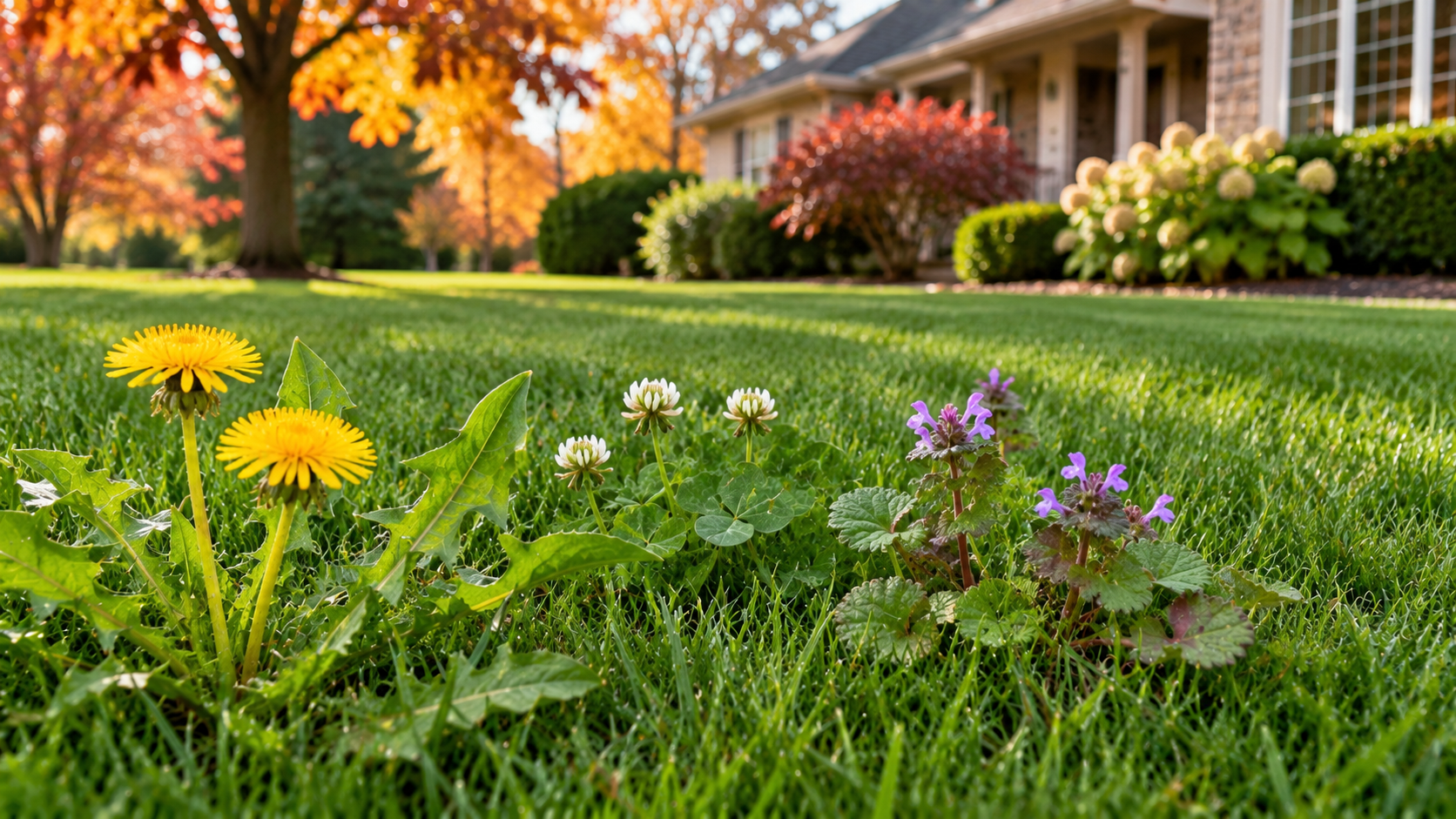
October is an important month for lawn care in the Kansas City area. As temperatures cool and summer stress begins to fade, homeowners often focus on preparing their lawns for winter. However, one important lawn care task is frequently overlooked: fall weed control.
While many homeowners associate weeds with spring and summer, certain weeds remain active during fall, and others begin establishing before winter arrives.
Taking advantage of favorable fall growing conditions can help reduce existing weeds, prevent certain winter weeds from becoming established, and create a healthier lawn heading into the following spring.
- Why Fall Is an Important Time for Weed Control
- Common Fall Lawn Weeds in Kansas City
- Why October Is a Good Time to Control Dandelions
- Winter Annual Weeds Begin Growing in Fall
- Fall Weed Control Can Help Reduce Spring Weed Problems
- Why Healthy, Thick Grass Helps Prevent Weeds
- Fall Fertilization and Weed Control Work Together
- Don't Overlook Weeds in Landscape Beds
- Can You Apply Weed Control After a Frost?
- Why Proper Weed Identification Matters
- October Is a Good Time to Evaluate Your Lawn
- Why Professional Fall Weed Control Makes Sense
- Get Your Kansas City Lawn Ready for Winter
Why Fall Is an Important Time for Weed Control
Fall provides favorable conditions for controlling many common lawn weeds found throughout the Kansas City area.
As temperatures become cooler, actively growing perennial weeds begin moving carbohydrates and other resources toward their roots in preparation for winter.
When appropriate herbicides are applied under favorable conditions, this natural movement can help certain systemic treatments reach underground plant structures.
Benefits of fall weed control can include:
- Targeting actively growing perennial weeds
- Reducing weed populations before winter
- Helping control established broadleaf weeds
- Reducing competition for water and nutrients
- Improving the overall appearance of your lawn
- Supporting healthier turf heading into spring
Treating weeds during fall can be an effective part of a comprehensive lawn care strategy, especially when combined with proper fertilization and other seasonal maintenance practices.
Common Fall Lawn Weeds in Kansas City
Several types of weeds can remain active or begin establishing during the fall months.
Some are perennial weeds that survive from year to year, while others are winter annual weeds that germinate in fall, survive winter, and resume growing in spring.
Common weeds Kansas City homeowners may encounter include:
- Dandelions
- White clover
- Broadleaf plantain
- Ground ivy, also known as creeping Charlie
- Wild violet
- Henbit
- Chickweed
- Purple deadnettle
Different weeds respond to different treatment methods. Proper identification is important because some species are more difficult to control than others.
A professional lawn care program can help identify problem weeds and determine appropriate treatment options.
Why October Is a Good Time to Control Dandelions
Dandelions are among the most recognizable broadleaf weeds found in Kansas City lawns.
Although their bright yellow flowers are most noticeable during spring, dandelions are perennial weeds that can remain active during cooler fall weather.
During fall, dandelions direct resources toward their deep taproots as they prepare for winter.
This makes fall an effective time to target established plants with appropriately selected systemic herbicides.
Fall dandelion control can help:
- Target established perennial weeds
- Reduce surviving dandelion populations
- Limit competition with desirable grass
- Improve lawn appearance
- Reduce some dandelion growth the following spring
- Support an ongoing weed management program
Treating dandelions in fall does not guarantee they will never return. Seeds can still germinate in the future, making continued lawn maintenance important.
Winter Annual Weeds Begin Growing in Fall
Not all weeds wait until spring to begin growing.
Winter annual weeds typically germinate during late summer or fall when soil temperatures and moisture conditions become favorable.
These weeds may remain small throughout winter before growing rapidly and producing flowers or seeds during spring.
Common winter annual weeds include:
- Henbit
- Purple deadnettle
- Common chickweed
- Hairy bittercress
- Annual bluegrass
Because these weeds begin establishing before winter, homeowners may not notice them until they become more visible in early spring.
Identifying winter annual weeds during fall can help determine whether preventive or post-emergent treatments are appropriate.
Fall Weed Control Can Help Reduce Spring Weed Problems
One of the biggest advantages of fall weed control is the opportunity to address certain weeds before the next growing season.
Perennial weeds that survive winter may resume growth when temperatures warm in spring.
Winter annual weeds can also become increasingly noticeable as they mature and begin flowering.
By addressing weeds during fall, homeowners may reduce some of the weed pressure they experience the following spring.
Potential benefits include:
- Reducing established perennial weeds before dormancy
- Managing young winter annual weeds
- Limiting competition with desirable turfgrass
- Improving the appearance of the lawn
- Supporting a healthier growing environment
- Complementing spring weed prevention programs
Fall weed control is not a replacement for spring treatments. Crabgrass prevention and other seasonal weed management practices may still be necessary.
Why Healthy, Thick Grass Helps Prevent Weeds
Weed control is not just about applying treatments to unwanted plants.
A healthy, dense lawn naturally competes with weeds for sunlight, water, nutrients, and growing space.
When grass becomes thin or damaged, weeds have more opportunities to establish in open areas.
Common factors contributing to weed problems include:
- Thin or weak turf
- Summer heat and drought damage
- Soil compaction
- Improper mowing practices
- Inadequate fertilization
- Poor irrigation coverage
- Excessive shade
Maintaining a healthy lawn through proper lawn care, fertilization, mowing, and seasonal maintenance can help reduce opportunities for weeds to establish.
Fall Fertilization and Weed Control Work Together
October is also an important time for fertilizing cool-season lawns throughout the Kansas City area.
Tall fescue and Kentucky bluegrass benefit from favorable fall growing conditions, which support root development and recovery from summer stress.
When properly timed, fertilization can help strengthen desirable grass while weed control treatments address unwanted plants.
Combining these practices can help:
- Support healthy root development
- Encourage stronger turf growth
- Improve lawn density
- Help grass recover from summer stress
- Reduce competition from established weeds
- Prepare the lawn for winter
Fertilization and weed control should be selected and timed based on the condition of the lawn, grass type, and specific treatment requirements.
A comprehensive lawn care program can help coordinate these services throughout the growing season.
Don’t Overlook Weeds in Landscape Beds
Weed problems are not limited to the grass in your yard.
Landscape beds, areas surrounding shrubs, and spaces along sidewalks or driveways can also experience weed growth during fall.
Some weeds may continue growing during mild weather, while others begin establishing in exposed soil before winter.
Pay particular attention to:
- Mulched landscape beds
- Areas surrounding shrubs and ornamental plants
- Edges of sidewalks and driveways
- Spaces along fences
- Areas beneath trees
- Open soil around landscape features
Removing weeds before they produce seeds can help reduce future weed pressure.
Maintaining appropriate mulch depth and minimizing exposed soil can also help discourage weed establishment in landscape beds.
Can You Apply Weed Control After a Frost?
Kansas City weather can change quickly during October and November.
Warm afternoons may be followed by freezing overnight temperatures, creating uncertainty about when weed control treatments should be applied.
The effectiveness of post-emergent herbicides depends on several factors, including temperature, weed growth, moisture conditions, and the product being used.
Important considerations include:
- Whether the target weeds are actively growing
- Current and expected temperatures
- Whether a hard freeze has damaged the foliage
- Soil moisture and recent rainfall
- Product-specific application requirements
- The condition of the surrounding turf
A light frost does not necessarily mean all weed control opportunities have ended.
However, treatments applied to weeds that are no longer actively growing may be less effective.
Always follow herbicide label instructions and avoid applications under unsuitable weather conditions.
Why Proper Weed Identification Matters
Not all lawn weeds respond to the same treatments.
Some weeds have deep root systems, while others spread through underground stems, creeping runners, or seeds.
Certain broadleaf weeds are relatively easy to manage, while others may require specialized products or repeated treatments.
Proper weed identification helps determine:
- Whether the weed is annual or perennial
- When the weed is actively growing
- Which treatment methods may be effective
- Whether multiple applications may be necessary
- How to reduce future weed establishment
- Whether cultural lawn care improvements are needed
Using the wrong treatment or applying it at the wrong time may produce disappointing results.
Professional lawn care technicians can identify common weeds and recommend treatment strategies appropriate for the lawn.
October Is a Good Time to Evaluate Your Lawn
Before colder weather arrives, October provides an opportunity to evaluate the overall condition of your lawn.
Walk your property and look for weeds that remain active, areas where grass is thin, and locations where weeds repeatedly appear.
Some problem areas may require more than weed control alone.
Pay particular attention to:
- Areas with recurring dandelion growth
- Shaded locations with ground ivy or wild violet
- Thin grass where weeds have become established
- Areas damaged by summer heat or drought
- Compacted sections near sidewalks or driveways
- Landscape beds with exposed soil
- Areas with poor drainage or irrigation coverage
Identifying these concerns can help determine which lawn care services may be beneficial before winter and during the following growing season.
Why Professional Fall Weed Control Makes Sense
Effective weed control requires more than simply spraying visible weeds.
Different weed species, weather conditions, and turfgrass varieties can influence which products and application methods are appropriate.
Professional lawn care services can help homeowners address existing weeds while supporting the overall health of their lawns.
Benefits of professional weed control can include:
- Identification of common lawn weeds
- Selection of appropriate treatment products
- Proper timing of seasonal applications
- Targeted treatment of problem areas
- Recommendations for improving turf health
- Ongoing monitoring and seasonal lawn care
Combining weed control with fertilization and other recommended lawn care services can help create a more consistent approach to maintaining a healthy lawn.
Get Your Kansas City Lawn Ready for Winter
Fall is an important opportunity to address weeds before winter arrives.
As temperatures cool, many perennial weeds remain active, while certain winter annual weeds begin establishing in lawns throughout the Kansas City area.
Properly timed weed control treatments, combined with fertilization and good lawn maintenance practices, can help reduce weed pressure and support healthier grass heading into the next growing season.
Aspen Lawn & Pest Control has been helping Kansas City homeowners maintain healthy, beautiful lawns since 1985. Our experienced team can evaluate your lawn and recommend seasonal weed control and fertilization services based on your property’s needs.
Don’t let weeds take over your lawn. Contact Aspen today to request your free estimate and prepare your lawn for winter.
Socials