
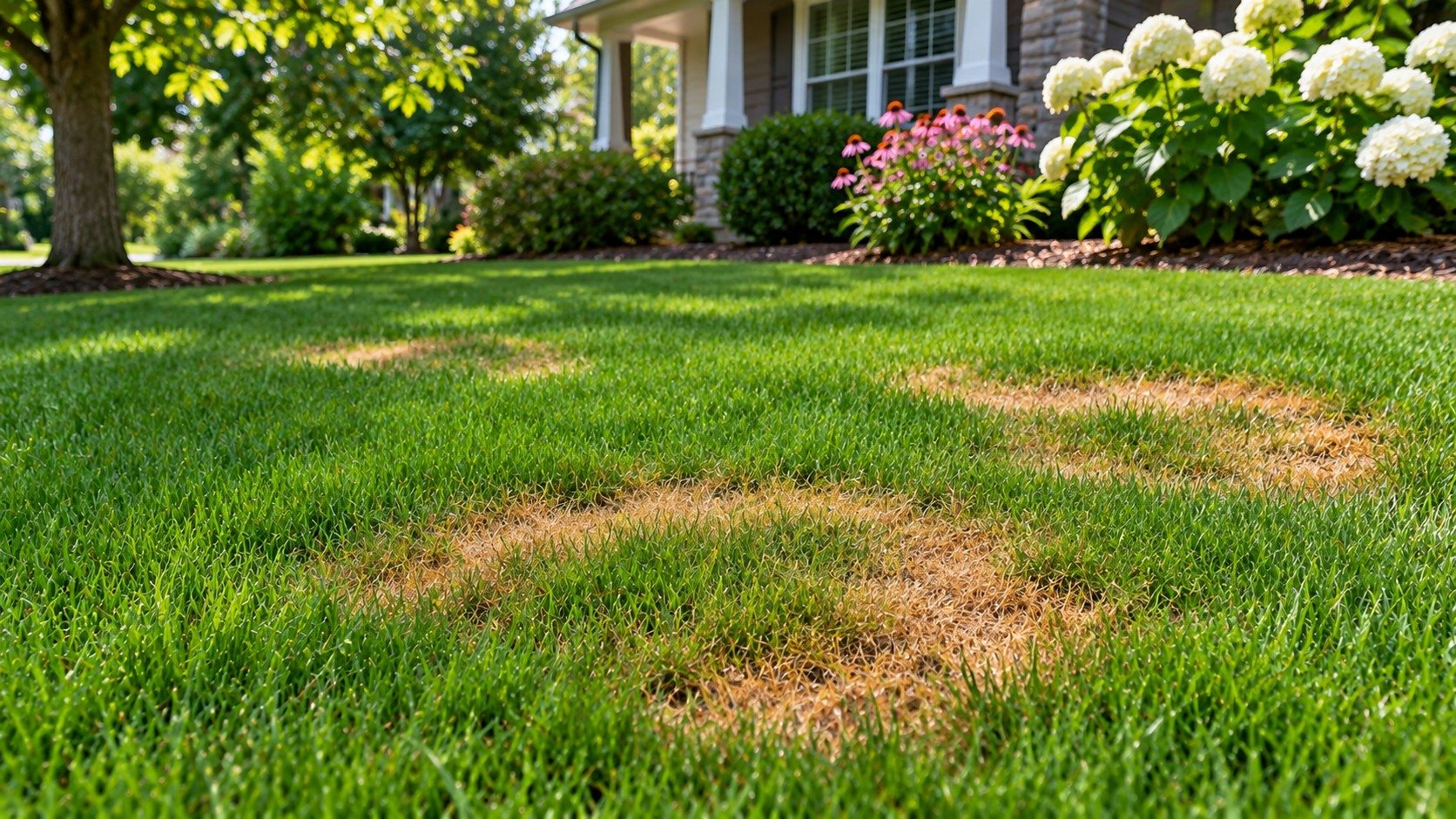
August can be one of the most challenging months for Kansas City lawns. High temperatures, humidity, and extended periods of summer stress can leave grass looking brown, patchy, or unhealthy.
While homeowners often assume brown grass is caused by drought or insufficient watering, another common problem may be responsible: brown patch lawn disease.
Brown patch is a fungal disease that frequently affects tall fescue lawns during hot, humid summer weather. Understanding the warning signs, conditions that encourage the disease, and available treatment options can help homeowners protect their lawns and encourage healthier growth.
- What Is Brown Patch Lawn Disease?
- Why Brown Patch Is Common in July and August
- How to Identify Brown Patch in Your Lawn
- Brown Patch vs. Drought Damage: What's the Difference?
- How Watering Habits Affect Brown Patch Disease
- Can Brown Patch Kill Your Grass?
- Can Fertilization Make Brown Patch Worse?
- How Professional Fungicide Treatments Help
- Why Preventive Fungicide Applications Are Important
- Other Lawn Care Practices That Help Prevent Brown Patch
- Will Brown Patch Go Away When Fall Arrives?
- When Should You Consider Fall Overseeding?
- Why Professional Lawn Disease Identification Matters
- Protect Your Kansas City Lawn From Brown Patch
What Is Brown Patch Lawn Disease?
Brown patch is a common fungal disease caused by Rhizoctonia solani, a fungus that affects several types of cool-season turfgrass.
Tall fescue, one of the most common grasses found throughout the Kansas City area, is particularly susceptible to brown patch during periods of warm temperatures and high humidity.
The disease primarily attacks grass blades, causing sections of turf to turn tan or brown.
In severe cases, brown patch may also damage the crowns of grass plants, potentially resulting in permanent turf loss.
Common characteristics of brown patch include:
- Brown or tan areas appearing throughout the lawn
- Circular or irregular patches of damaged grass
- Grass that appears drought-stressed despite adequate moisture
- Tan lesions with darker brown borders on individual grass blades
- Rapid changes in lawn appearance during humid weather
- Thinning turf in areas affected by severe disease
Although brown patch can make a lawn look severely damaged, many affected lawns recover when weather conditions become more favorable.
Why Brown Patch Is Common in July and August
Brown patch becomes especially active during the hottest and most humid periods of summer.
Kansas City frequently experiences warm nighttime temperatures, high humidity, and extended periods of moisture on grass blades during July and August.
These conditions create an environment where the fungus can develop and spread.
Brown patch activity is commonly associated with:
- Nighttime temperatures above approximately 65 to 70 degrees
- High humidity
- Extended periods of morning dew
- Frequent rainfall
- Grass remaining wet for long periods
- Excessive irrigation during humid weather
- Heavy nitrogen fertilization during summer
When conditions are favorable, brown patch symptoms can develop rapidly, sometimes becoming noticeable within a day or two.
How to Identify Brown Patch in Your Lawn
Brown patch can be difficult to identify because its symptoms may resemble several other lawn problems.
From a distance, affected areas may look similar to grass damaged by drought, insects, or excessive heat.
However, a closer inspection of individual grass blades may reveal signs associated with fungal disease.
Look for the following symptoms:
- Irregular brown or tan patches throughout the lawn
- Distinct circular areas of discolored grass
- Tan spots on individual blades with dark brown borders
- Grass appearing wilted even when soil moisture is adequate
- Rapid spreading of damaged areas during humid weather
- Fine, white, cobweb-like fungal growth during damp mornings
Not every brown area in a lawn is caused by brown patch.
Correct identification is important because drought, insects, and other turfgrass diseases may require completely different treatments.
Brown Patch vs. Drought Damage: What’s the Difference?
One of the most common mistakes homeowners make is assuming that every brown area of grass needs additional watering.
Unfortunately, adding more water to a lawn affected by brown patch may increase the amount of time grass blades remain wet and create conditions favorable for additional disease activity.
Although drought stress and brown patch can appear similar, several differences may help identify the cause.
Signs that may suggest brown patch include:
- Brown areas appearing despite adequate soil moisture
- Tan lesions with darker borders on individual grass blades
- Damage developing rapidly during hot, humid weather
- Irregular patches spreading across the lawn
- Fungal growth visible during humid mornings
Signs that may suggest drought stress include:
- Dry soil several inches below the surface
- Grass blades folding or wilting
- Footprints remaining visible after walking across the lawn
- Damage appearing first in areas with poor irrigation coverage
- Grass discoloration during extended dry weather
These symptoms are not definitive on their own. A professional lawn evaluation can help determine whether the problem involves disease, drought, or another issue.
How Watering Habits Affect Brown Patch Disease
Proper irrigation is one of the most important factors in managing brown patch.
The fungus develops more readily when grass blades remain wet for extended periods, particularly during warm, humid nights.
Watering late in the evening can increase the amount of time moisture remains on the grass overnight.
To help reduce disease pressure, homeowners should:
- Water during the early morning hours
- Avoid routine evening and nighttime irrigation
- Allow grass blades time to dry during the day
- Avoid unnecessary watering when rainfall is sufficient
- Monitor soil moisture rather than relying only on appearance
- Correct irrigation coverage problems
- Avoid watering practices that create prolonged wet conditions
An appropriately maintained irrigation system can help deliver more consistent watering while reducing conditions that contribute to lawn disease.
Can Brown Patch Kill Your Grass?
Brown patch can make a healthy lawn appear severely damaged in a short period of time.
However, the disease primarily affects the grass blades rather than the root system.
In many cases, the crowns and roots remain alive, allowing the lawn to recover when temperatures cool and disease activity slows.
Recovery depends on several factors:
- Severity of the infection
- Duration of hot and humid weather
- Overall health of the lawn
- Grass variety
- Soil moisture conditions
- Additional stress from drought or foot traffic
- Whether the grass crowns remain healthy
Many lawns begin recovering as cooler temperatures return in late summer or early fall.
However, severe infections can damage grass crowns and result in thinning or permanent turf loss.
Areas that do not recover may benefit from fall overseeding once conditions become favorable.
Can Fertilization Make Brown Patch Worse?
Fertilization is an important part of maintaining healthy grass, but applying excessive nitrogen during hot, humid weather can increase the severity of brown patch.
Heavy nitrogen applications encourage rapid, tender leaf growth that may be more susceptible to disease.
For cool-season lawns, most major fertilization should generally be concentrated during more favorable growing periods rather than during extreme summer heat.
Important considerations include:
- Avoid excessive nitrogen applications during summer
- Do not fertilize while brown patch is actively developing
- Follow recommended seasonal fertilization schedules
- Consider the condition of the lawn before applying nutrients
- Avoid attempting to force rapid growth during stressful weather
- Coordinate fertilization with other lawn care treatments
A professional lawn care program can help coordinate fertilization and disease management based on seasonal growing conditions.
How Professional Fungicide Treatments Help
Fungicides can be an important tool for managing brown patch, particularly on lawns with a history of severe or recurring disease.
However, fungicides work differently from treatments designed to eliminate insects or weeds.
Most fungicides used for brown patch are most effective when applied preventively, before significant disease damage occurs.
They help protect susceptible grass from additional infection but cannot restore grass blades that have already died.
Professional fungicide treatments may help:
- Reduce the risk of new fungal infections
- Protect susceptible turf during favorable disease conditions
- Limit additional disease development
- Support an ongoing disease management strategy
- Protect lawns with recurring brown patch problems
- Complement proper irrigation and mowing practices
Treatment timing, product selection, and application intervals depend on weather conditions, disease pressure, and the specific fungicide being used.
Not every lawn affected by brown patch requires fungicide treatment. Many lawns recover naturally when cooler weather returns.
Why Preventive Fungicide Applications Are Important
Homeowners often wait until large brown areas appear before considering professional treatment.
However, by the time visible damage develops, the fungus may already have affected a significant amount of grass foliage.
For lawns with recurring brown patch problems, preventive fungicide applications may provide better protection than waiting until symptoms become severe.
Preventive treatment programs may consider:
- Previous history of brown patch
- Susceptibility of the grass variety
- Expected nighttime temperatures
- Humidity and rainfall patterns
- Duration of leaf wetness
- Overall lawn health
- Product-specific application timing
Preventive fungicide applications are commonly considered during early summer before extended periods of hot, humid weather.
A professional lawn care provider can help determine whether preventive treatment is appropriate for your property.
Other Lawn Care Practices That Help Prevent Brown Patch
Fungicide treatments are only one part of an effective lawn disease management strategy.
Proper mowing, watering, fertilization, and landscape maintenance can also influence the likelihood and severity of brown patch.
Reducing unnecessary stress helps cool-season grass remain healthier during difficult summer conditions.
Helpful practices include:
- Maintain appropriate mowing heights for your grass type
- Keep mower blades sharp
- Avoid mowing excessively short during summer
- Water during the early morning
- Avoid excessive nitrogen fertilization
- Improve airflow in heavily shaded areas
- Address irrigation coverage problems
- Reduce unnecessary traffic across stressed turf
These practices cannot eliminate the fungus responsible for brown patch, but they can help reduce favorable conditions for disease development.
Will Brown Patch Go Away When Fall Arrives?
One of the encouraging aspects of brown patch is that many affected lawns can recover when cooler weather returns.
As nighttime temperatures decrease and humidity becomes less favorable for fungal activity, the disease generally begins slowing.
Cool-season grasses also experience more favorable growing conditions during early fall.
Recovery may involve:
- Reduced fungal activity
- New grass blade growth
- Improved turf appearance
- Gradual recovery of damaged areas
- Stronger growth under favorable temperatures
Lawns with mild to moderate brown patch damage may recover within a few weeks once favorable growing conditions return.
However, severely damaged areas may remain thin or bare and require additional lawn care.
When Should You Consider Fall Overseeding?
If brown patch has caused significant thinning or permanent damage, fall overseeding may help restore the lawn.
September generally provides favorable growing conditions for establishing cool-season grasses throughout the Kansas City area.
Warm soil temperatures and cooler air temperatures help support germination and root development.
Overseeding may be beneficial when:
- Large areas of grass have become thin
- Brown patches have not recovered
- Permanent turf loss has occurred
- Weeds are beginning to establish in damaged areas
- The lawn has experienced repeated summer disease problems
- Additional grass density is needed
Professional aeration and overseeding can help introduce new grass into damaged areas while improving growing conditions for existing turf.
Selecting improved tall fescue varieties with better disease tolerance may also help reduce future problems.
Why Professional Lawn Disease Identification Matters
Brown spots can develop for many reasons, and not every damaged lawn requires fungicide treatment.
Drought, heat stress, insect damage, irrigation problems, and several turfgrass diseases can create similar symptoms.
Applying the wrong treatment may waste money and fail to address the actual problem.
Professional lawn evaluations can help identify:
- Symptoms consistent with fungal disease
- Areas affected by drought or heat stress
- Improper irrigation coverage
- Potential insect damage
- Excessive soil moisture
- Thin or weakened turf
- Conditions contributing to recurring lawn problems
Identifying the cause of lawn damage is the first step toward selecting an appropriate treatment or recovery strategy.
Protect Your Kansas City Lawn From Brown Patch
Hot temperatures, high humidity, and extended periods of moisture can create ideal conditions for brown patch throughout the Kansas City summer.
Although brown patch can cause significant discoloration and thinning, many affected lawns recover when cooler weather returns.
Proper watering, mowing, fertilization, and preventive disease management can help reduce the risk of recurring problems.
Aspen Lawn & Pest Control has been helping Kansas City homeowners maintain healthy, beautiful lawns since 1985. Our experienced team can evaluate lawn disease concerns and recommend appropriate lawn care and fungicide treatment options.
Don’t let brown patch ruin the appearance of your lawn. Contact Aspen today to request your free estimate and help protect your lawn from summer disease damage.
Socials