
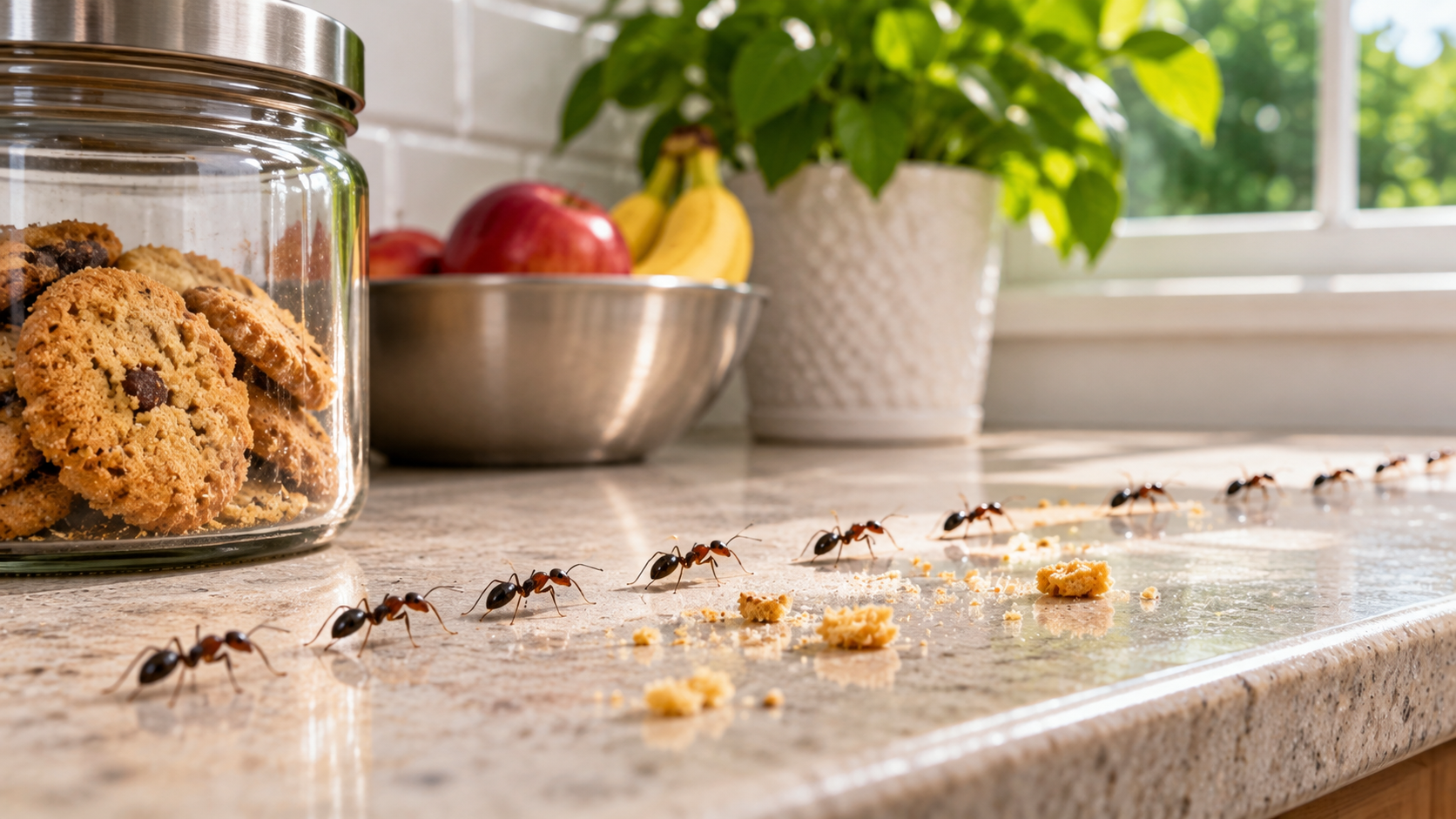
May brings warmer temperatures, longer days, and increased outdoor activity throughout the Kansas City area. Unfortunately, spring also brings an increase in pest activity, including one of the most common household nuisances: ants.
As temperatures rise, ant colonies become more active, searching for food, water, and suitable nesting locations. While ants play an important role in the outdoor environment, they can quickly become a frustrating problem when they begin appearing in kitchens, bathrooms, basements, and other areas inside your home.
Understanding why ants become more active during spring, recognizing the signs of an infestation, and taking preventive steps can help Kansas City homeowners reduce unwanted ant activity before it becomes a larger problem.
- Why Ant Activity Increases During Spring
- Common Types of Ants Found in Kansas City Homes
- Why Ants Invade Kitchens, Bathrooms, and Basements
- How Ants Find Their Way Inside Your Home
- Carpenter Ants vs. Common Household Ants
- Signs You May Have an Ant Infestation
- Why DIY Ant Treatments Don't Always Work
- How Ant Baits and Professional Treatments Work
- How to Prevent Ants From Entering Your Home
- Don't Forget About Ant Prevention Around Your Yard
- Why Spring Is a Good Time for Professional Pest Control
- Why Year-Round Pest Control Is Important
- When Should You Call a Professional for Ant Problems?
- Keep Your Kansas City Home Protected From Ants This Spring
Why Ant Activity Increases During Spring
Ants are cold-blooded insects, meaning their activity is influenced by surrounding temperatures.
During colder months, many ant species become less active outdoors and remain protected within their colonies.
As spring temperatures rise, colonies become more active and worker ants begin searching for food and water.
Several factors contribute to increased ant activity during May:
- Warmer temperatures encouraging outdoor activity
- Colonies expanding during favorable growing conditions
- Increased demand for food and water
- Spring rainfall affecting outdoor nesting areas
- Ants exploring new food sources
- Greater movement around foundations and landscaping
Although ants can enter homes throughout the year, spring often marks the beginning of more noticeable activity for many common household species.
Common Types of Ants Found in Kansas City Homes
Several ant species can become household pests throughout the Kansas City area.
While many ants look similar at first glance, different species have different nesting habits, food preferences, and treatment requirements.
Common household ants include:
- Odorous house ants
- Pavement ants
- Carpenter ants
- Acrobat ants
- Little black ants
- Other occasional household ant species
Odorous house ants are known for producing an unpleasant odor when crushed and frequently enter homes while searching for food.
Pavement ants commonly nest beneath sidewalks, driveways, and other paved surfaces.
Carpenter ants are larger than many common household ants and can become a concern when they establish nests within wooden structures.
Proper identification is important because effective treatment methods can vary depending on the species involved.
Why Ants Invade Kitchens, Bathrooms, and Basements
Ants typically enter homes because they have discovered accessible food, moisture, or suitable nesting conditions.
Kitchens are especially attractive because they often contain crumbs, food residue, and other easily accessible food sources.
Bathrooms and basements may attract certain ant species because of moisture around plumbing, drains, and damp building materials.
Common attractions include:
- Food crumbs on countertops and floors
- Unsealed pantry items
- Pet food left in open containers
- Sticky spills and sugary residue
- Leaking pipes and faucets
- Moisture around sinks and appliances
- Damp areas in basements and crawl spaces
Once worker ants discover a reliable food source, they may leave chemical trails that help other ants from the colony locate the same area.
This is why homeowners sometimes notice a few ants initially, followed by a much larger number appearing along the same path.
How Ants Find Their Way Inside Your Home
Ants are small insects capable of entering through openings that homeowners may not immediately notice.
Even well-maintained homes can have tiny gaps around foundations, doors, windows, and utility connections.
Worker ants may travel along exterior walls, landscaping, or structural features while searching for food and water.
Common entry points include:
- Cracks in foundations
- Gaps beneath exterior doors
- Openings around windows
- Spaces around plumbing and utility lines
- Damaged weatherstripping
- Gaps around siding and exterior trim
- Openings near patios and garage doors
Ants may also establish nests within wall voids, insulation, or other protected areas of a home.
Sealing accessible entry points and reducing conditions that attract ants can help limit indoor activity.
Carpenter Ants vs. Common Household Ants
Not all ants pose the same level of concern for homeowners.
Many common household ants are primarily nuisance pests because they enter homes searching for food and water.
Carpenter ants, however, deserve additional attention because they can excavate galleries inside wood to establish nesting areas.
Unlike termites, carpenter ants do not eat wood. Instead, they remove wood material while creating spaces for their colonies.
Potential signs of carpenter ant activity include:
- Large black or reddish ants appearing indoors
- Ant activity around wooden structures
- Small piles of wood shavings or debris
- Ants emerging from wall voids or trim
- Activity near moisture-damaged wood
- Winged ants appearing inside the home
Carpenter ants often prefer damp or previously damaged wood, although some species can also nest in sound wood.
Because carpenter ant activity may indicate an established colony within or near a structure, professional identification is recommended when these warning signs appear.
Signs You May Have an Ant Infestation
Finding one or two ants inside your home does not necessarily mean you have a serious infestation.
However, repeated sightings or large numbers of ants appearing in the same areas may indicate an established colony nearby.
Ants often follow consistent travel routes between nesting locations and food sources.
Common warning signs include:
- Repeated ant sightings in kitchens or bathrooms
- Lines of ants traveling along walls or countertops
- Ants appearing near windows or exterior doors
- Activity around pet food or pantry items
- Small piles of soil near cracks or pavement
- Ants emerging from wall openings
- Winged ants appearing indoors
If ant activity continues despite basic cleaning and prevention efforts, the colony may be located in an area that requires additional attention.
Why DIY Ant Treatments Don’t Always Work
Many homeowners turn to store-bought sprays when ants begin appearing inside their homes.
While some products may eliminate visible ants, they do not always address the colony responsible for the problem.
Ant colonies can contain hundreds or thousands of individuals, depending on the species.
Eliminating a small number of worker ants may have little effect on the colony itself.
Common challenges with DIY ant control include:
- Treating visible ants without locating the colony
- Using products that are not appropriate for the species
- Failing to identify entry points
- Overlooking food and moisture sources
- Applying sprays that interfere with bait effectiveness
- Not addressing multiple nesting locations
- Repeated activity after temporary improvements
Some ant species may also respond to certain disturbances by relocating or dividing colonies, making control more complicated.
Proper identification and treatment selection can help improve long-term results.
How Ant Baits and Professional Treatments Work
Effective ant control often requires targeting more than the ants homeowners can see.
Depending on the species and location of the colony, ant baits or other targeted treatments may be recommended.
Ant baits work by attracting foraging ants to a food source containing an active ingredient.
Workers may carry the bait back to the colony, allowing the treatment to affect additional ants.
Important considerations include:
- Correct identification of the ant species
- Selection of appropriate bait or treatment products
- Placement near active ant trails
- Food preferences of the target species
- Location of nesting areas
- Environmental conditions affecting activity
- Following product label instructions
Different ant species may prefer sweet, protein-based, or other food sources at different times.
Professional pest control technicians can evaluate the situation and recommend appropriate treatment methods.
How to Prevent Ants From Entering Your Home
Preventing ants often begins with reducing access to food, water, and entry points.
Although no single prevention method guarantees that ants will never enter a home, consistent maintenance can make your property less attractive to them.
Homeowners can take several practical steps.
Helpful ant prevention practices include:
- Clean countertops and food preparation areas regularly
- Store pantry foods in sealed containers
- Clean up crumbs and spills promptly
- Avoid leaving pet food out unnecessarily
- Keep garbage containers securely closed
- Repair leaking faucets and plumbing
- Seal cracks and gaps around doors and windows
- Replace damaged weatherstripping
- Reduce excess moisture in basements and crawl spaces
These preventive measures can help reduce the conditions that encourage ants to enter and remain inside your home.
Don’t Forget About Ant Prevention Around Your Yard
Ant prevention should extend beyond the interior of your home.
The landscaping and outdoor conditions surrounding your property can influence ant activity near foundations, patios, and entry points.
Some ant species establish colonies beneath mulch, stones, landscape timbers, or other protected areas.
Pay particular attention to:
- Mulch piled directly against siding
- Overgrown shrubs touching exterior walls
- Tree branches contacting the home
- Standing water near the foundation
- Moisture-damaged landscape timbers
- Firewood stored directly against the house
- Debris accumulating near exterior walls
Maintaining appropriate mulch depth, trimming vegetation, and addressing drainage problems can help reduce favorable nesting conditions around your home.
Keeping outdoor areas clean and well-maintained also makes it easier to identify developing pest problems.
Why Spring Is a Good Time for Professional Pest Control
Spring is an important season for pest prevention because many insects become increasingly active as temperatures warm.
Addressing pest concerns early can help reduce the likelihood of recurring problems during the summer months.
Professional pest control services can help identify existing activity and recommend preventive measures based on the property’s needs.
Benefits of professional spring pest control can include:
- Identifying common household pests
- Evaluating areas with recurring ant activity
- Locating potential pest entry points
- Applying targeted treatments when appropriate
- Recommending sanitation and moisture improvements
- Monitoring seasonal pest concerns
- Helping reduce recurring infestations
Aspen Lawn & Pest Control offers professional pest control services designed to help Kansas City homeowners manage common household pests.
Our Home Armor pest control program provides ongoing protection against a variety of common household pests, including ants.
Why Year-Round Pest Control Is Important
Although ants are often more noticeable during spring and summer, pest activity does not necessarily disappear when temperatures become colder.
Some ant species may remain active indoors throughout the year, particularly in heated buildings or protected nesting areas.
Other household pests also become more active during different seasons.
A consistent pest management approach can help homeowners address changing pest pressures throughout the year.
Benefits of year-round pest control can include:
- Monitoring recurring pest activity
- Addressing seasonal infestations
- Identifying conditions that attract pests
- Supporting preventive treatment strategies
- Reducing the likelihood of recurring problems
- Providing professional recommendations throughout the year
Combining professional treatments with good home maintenance practices can provide a more comprehensive approach to protecting your property.
When Should You Call a Professional for Ant Problems?
Occasional ant sightings may be manageable with cleaning, sealing entry points, and other basic preventive measures.
However, recurring ant activity can indicate a colony that requires more targeted treatment.
Homeowners should consider professional assistance when:
- Ants repeatedly return after cleaning
- Large numbers of ants appear indoors
- Ant trails continue developing in the same areas
- Ants appear to be nesting inside walls
- Carpenter ants are suspected
- Winged ants emerge inside the home
- DIY treatments provide only temporary relief
Professional identification is especially important when carpenter ants or other wood-associated pests may be involved.
Keep Your Kansas City Home Protected From Ants This Spring
As temperatures warm throughout May, increased ant activity can become a frustrating problem for Kansas City homeowners.
Whether ants are searching for food in your kitchen, entering through foundation cracks, or nesting around your property, early prevention can help reduce unwanted activity.
Proper sanitation, sealing entry points, managing moisture, and professional pest control can all play important roles in protecting your home.
Aspen Lawn & Pest Control has been helping Kansas City homeowners manage pest problems since 1985. Our experienced team provides professional pest control solutions, including Home Armor services designed to help protect homes from common household pests.
Don’t let ants take over your home this spring. Contact Aspen today to request your free estimate and help keep your home protected from unwanted pests.
Socials